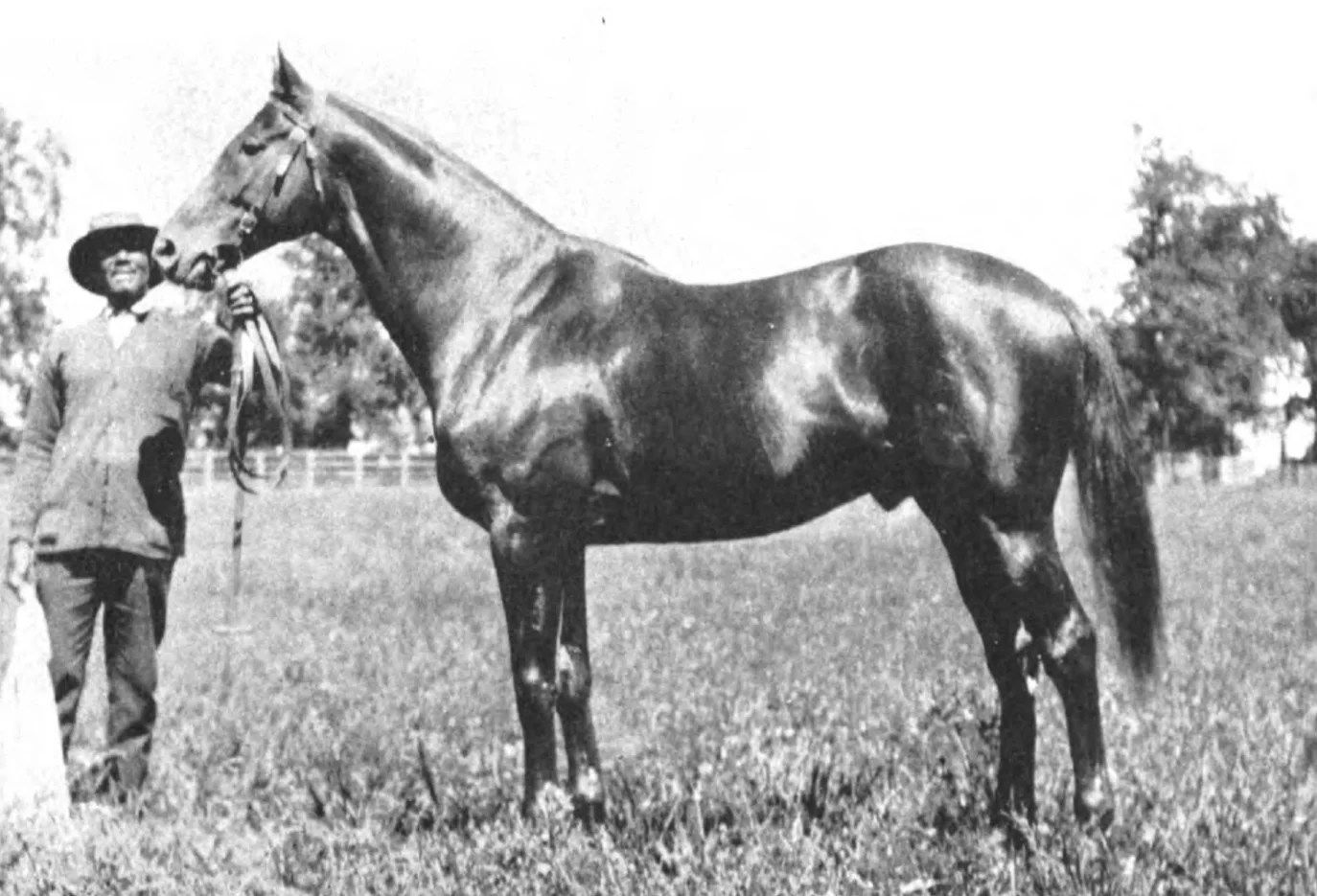
At a glance
Identity snapshot
Verified biographical fields, separated from interpretation.
- Foaled
- March 29, 1917, Kentucky, United States
- Life
- 1917-1947
- Sex / color
- Stallion / chestnut
- Hall of Fame
- Inducted 1957
Profile
The story
Bred by August Belmont II, Man o' War was sold with Belmont's yearling crop while the breeder was involved in the First World War effort. Samuel Riddle bought the large chestnut for $5,000 on trainer Louis Feustel's advice. Johnny Loftus rode him through a dominant juvenile season in which he won nine of ten starts. His only defeat came at Saratoga after barrier disruptions, a poor start, and traffic; Upset prevailed by half a length.
With Clarence Kummer becoming his principal rider at three, Man o' War went undefeated in eleven races. Riddle intentionally bypassed the Kentucky Derby, sending him instead to victories in the Preakness, Withers, and Belmont. Later performances expanded his reputation across distances and under significant weight. He ended his career by defeating the older Triple Crown winner Sir Barton in Canada. At stud, Man o' War produced 64 stakes winners from 386 registered foals, including Triple Crown winner War Admiral, and his influence reached both racing and sport-horse pedigrees.
Editorial analysis
Why this horse matters
Man o' War established an American model for the racehorse as both elite athlete and mass cultural attraction. His record combines near-perfect consistency with performances from sprint distances through extended routes, often under weights that materially shaped the conditions. His story also requires era awareness: webbing barriers, timing, surfaces, and campaign patterns differed from modern racing. The strongest comparison is therefore dominance relative to contemporaries, weights carried, margins, and documented records rather than a fabricated modern speed number.
Selected record
Career highlights
A concise chronology of documented championship and major-event performances.
- 1919
Nine-win juvenile season
Won nine of ten starts, including the Hopeful and Futurity.
- 1919
The lone defeat
Finished second to Upset at Saratoga after a difficult start; it remained his only loss.
- 1920
Preakness and Belmont
Won both classics after his owner deliberately skipped the Kentucky Derby.
- 1920
Travers Stakes
Added Saratoga's historic three-year-old feature during an undefeated season.
- 1920
Lawrence Realization
Produced one of the era's most emphatic winning margins at an extended distance.
- 1920
Kenilworth Gold Cup
Defeated Sir Barton in his final start to finish 20-for-21.
Live name watch
News mentioning Man o' War
Exact-name matches from this horse's discipline only. No fuzzy matches, recycled stories or unrelated fallback headlines.
No recent exact-name coverage for Man o' War appears in the monitored thoroughbred racing feeds right now.
Checked Aug 2, 2026, 10:26 PM EDT. No match means only that the current monitored feed window contains no exact reference; it is not a claim that no coverage exists elsewhere.
Open the full live news deskReference desk
Research record
Pedigree, people and career facts remain grouped by type for quick comparison.
Career record
- Career
- 1919-1920
- Starts
- 21
- Record
- 20 wins, 1 second
- Earnings
- $249,465 (historical nominal dollars)
Pedigree
- Sire
- Fair Play
- Dam
- Mahubah
- Damsire
- Rock Sand
Connections
- Breeder
- August Belmont II
- Owner
- Samuel D. Riddle
- Trainer
- Louis Feustel
- Principal riders
- Johnny Loftus and Clarence Kummer
Reading the record
Research context
Technical and historical notes, presented as context rather than instruction.
Starts used a webbing barrier rather than a modern starting gate, an important context for his lone defeat.
Samuel Riddle deliberately skipped the Kentucky Derby; Man o' War did not fail to qualify for it.
Early twentieth-century times, weights, and surfaces are not directly comparable to modern speed figures.
Provenance
Detailed source trail
Open the institutional record behind the dossier and see exactly what each source supports.
National Museum of Racing and Hall of Fame
Man o' War (KY) (opens in a new tab)
Identity, pedigree, connections, campaign, records, stud career, and death.
Accessed July 25, 2026
Kentucky Horse Park
Man o' War (opens in a new tab)
Birthplace, purchase context, color, and memorial legacy.
Accessed July 25, 2026
Continue researching
Build a reading path from the record
Every connection below is generated from fields already present in the source-linked archive. It is a research lead, not a claim that two horses had equivalent careers.
Follow the recorded lineage
These links come from an explicitly named sire, dam, damsire, or a parent shared by both source records.
Racing
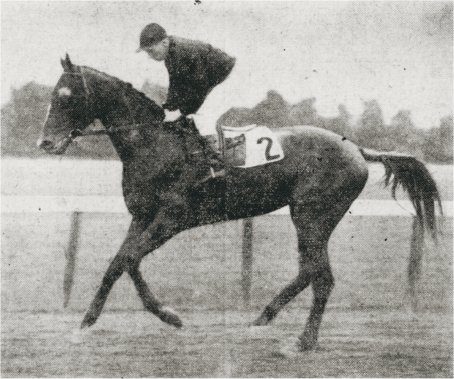
Fair Play
horse
- Recorded sire of Man o' War
- Fair Play
- Shared discipline
- Racing
- Foaled within twelve years
- 1905
- Shared recorded sex category
- Stallion / chestnut
Racing
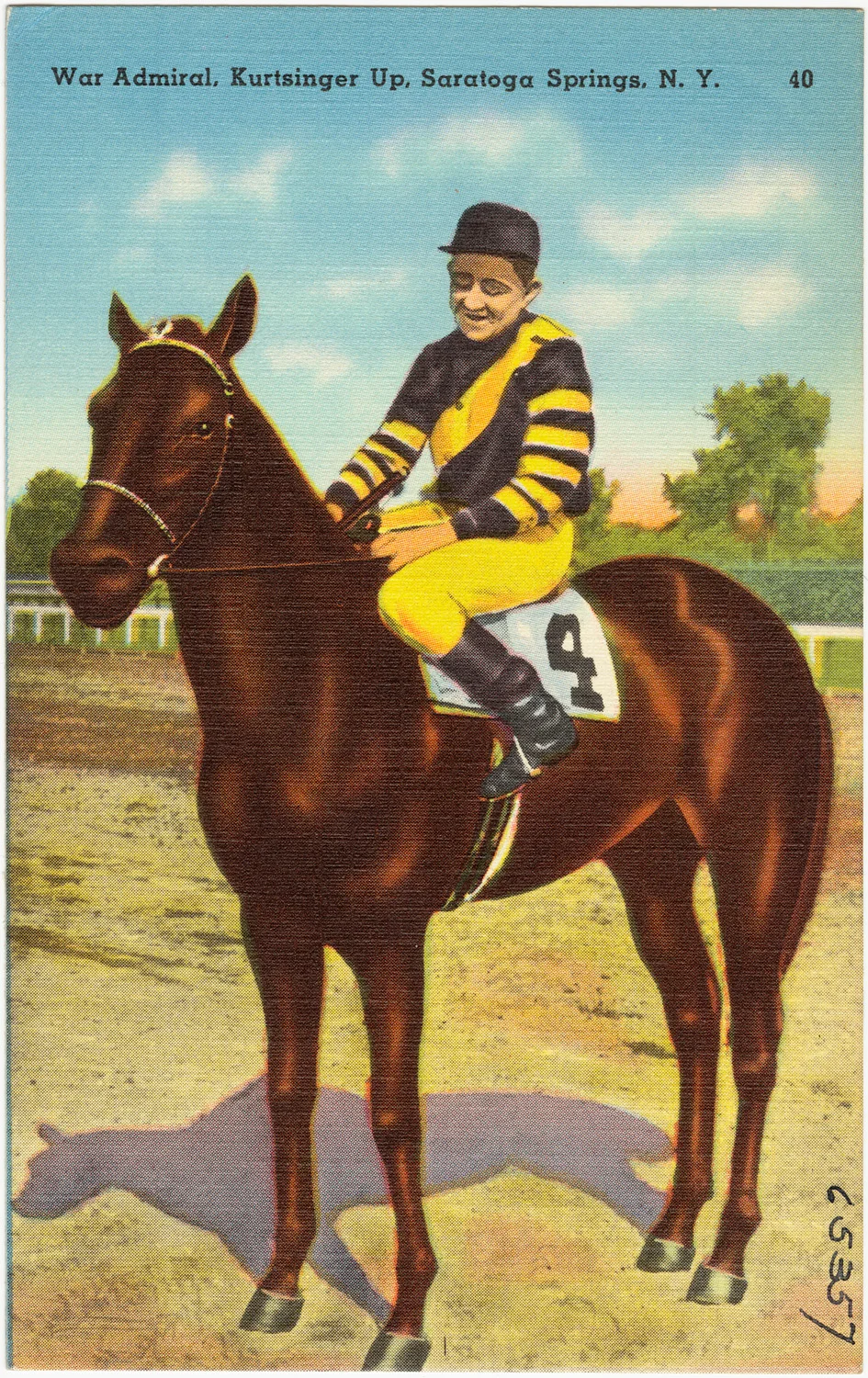
War Admiral
Man o' War's most accomplished racing son swept the 1937 Triple Crown, won 21 of 26 starts, and later became a leading sire.
- Names Man o' War as sire
- Man o' War
- Shared discipline
- Racing
- Shared recorded place
- Kentucky
- Foaled within twenty-five years
- 1934

Racing
Mahubah
American-bred Thoroughbred racehorse
- Recorded dam of Man o' War
- Mahubah
- Shared discipline
- Racing
- Foaled within twelve years
- 1910

Racing
Rock Sand
British Thoroughbred race horse
- Recorded damsire of Man o' War
- Rock Sand
- Shared discipline
- Racing
- Foaled within twenty-five years
- 1900
- Shared recorded sex category
- Stallion / chestnut
Compare documented peers
These horses share multiple recorded identity fields, such as discipline, breed, country, sex, or foaling period.
Racing
Fluvanna
American thoroughbred champion racehorse
- Foaled within five years
- 1921
- Shared discipline
- Racing
- Shared recorded place
- United States

Racing
Orange Peel
horse
- Foaled within five years
- 1919
- Shared discipline
- Racing
- Shared recorded sex category
- Stallion / chestnut

Racing
Pharos
British-bred Thoroughbred racehorse
- Foaled within five years
- 1920
- Shared discipline
- Racing
- Shared recorded sex category
- Stallion / chestnut

Racing
Exterminator
American-bred Thoroughbred racehorse
- Foaled within five years
- 1915
- Shared discipline
- Racing
- Shared recorded sex category
- Stallion / chestnut
Stay within the discipline
These source-linked records share the same discipline classification; open each profile to establish any closer comparison.

Notable horses
Shirayuki
Japanese Emperor Hirohito's horse
- Foaled within five years
- 1921
- Shared recorded sex category
- Stallion / chestnut
Notable horses
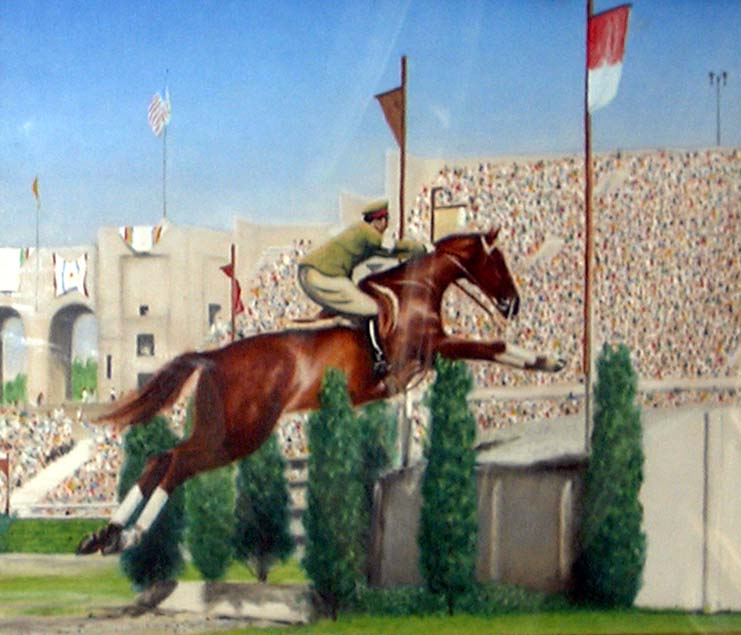
Uranus
stallion
- Foaled within five years
- 1920
- Shared recorded sex category
- Stallion / chestnut
Notable horses
Old Sorrel
Quarter Horse stallion and sire
- Foaled within five years
- 1915
- Shared recorded sex category
- Stallion / chestnut

Harness racing
Pro Patria
French trotter stallion
- Foaled within five years
- 1915
- Shared recorded sex category
- Stallion / chestnut
Field notebook
Questions the available evidence can support
Pedigree ledger
List each sire, dam, and damsire recorded for Man o' War; open the linked source before carrying a relationship into another generation.
Based on: Recorded pedigree fieldsEra comparison
Start with Man o' War's recorded foaling year (1917). Date every comparison and keep later commentary separate from contemporaneous results.
Based on: Recorded foaling yearConnection map
Trace the recorded breeder, owner, trainer, rider entries one source at a time. Preserve the role and date attached to each source rather than assuming a permanent relationship.
Based on: Named connections, events, or honorsIdentity language
Copy breed, studbook, sex, and place terms exactly as the source presents them; note conflicts instead of silently standardizing them.
Based on: Recorded identity fieldsSource check
Open the 2 linked sources, record the publisher and retrieval or revision date, and mark which displayed fields each source actually supports.
Based on: Linked source trail
From profile to reading room
Continue from Man o' War's record
4 original briefs · 30 reading minutes · 19 direct references. These are research-method companions, not additional claims about the horse.
Profile-linked brief
Stud fee is a price tag, not a breeding verdict
The advertised fee opens a stallion dossier. Book size, opportunity, mare quality, crop age, contract terms, and the goals for the mating determine what the price can and cannot mean.
Why read this next: The editorial index explicitly connects this brief to Man o' War. Use its bloodstock research framework and 4 direct references as a method companion; the link does not add a new fact to the horse profile.
Read the original briefDiscipline research
A finish line is not an exit plan
Retirement can mean rehabilitation, retraining, adoption, sanctuary, or another carefully matched role. Good research follows the horse beyond the final chart.
Why read this next: This aftercare and welfare brief shares the profile's Thoroughbred racing classification. Its 5 direct references help test context and source boundaries; the brief is not evidence about this individual horse.
Read the original briefDiscipline research
The Derby leaderboard is an entry queue, not a power ranking
Points answer whether a horse can get into the gate. The performances beneath those points help answer what kind of contender may arrive there.
Why read this next: This kentucky derby research brief shares the profile's Thoroughbred racing classification. Its 5 direct references help test context and source boundaries; the brief is not evidence about this individual horse.
Read the original briefDiscipline research
The number never ran the race
A speed figure makes performances comparable; it does not make their circumstances identical. Read the class, surface, pace, trip, and chart before deciding what the number means.
Why read this next: This race-record literacy brief shares the profile's Thoroughbred racing classification. Its 5 direct references help test context and source boundaries; the brief is not evidence about this individual horse.
Read the original briefData boundary
Unknown is not a blank to fill
This dossier publishes reviewed fields and source-backed editorial analysis only. A field that is not shown remains not established in this source-checked dossier. EquinAtlas does not infer missing results, ownership, health, availability, or commercial terms.